
Growing an eCommerce brand requires more than sending promotional emails whenever a new product launches or a sale begins. The strongest retention programs use automated messages to respond to customer behavior, deliver relevant information, and create opportunities for customers to purchase again.
For direct-to-consumer (DTC) brands, email and SMS automation can connect the entire customer journey, from the first website visit to repeat purchases and long-term loyalty.
The key is building the right flows before adding unnecessary complexity.
What Are eCommerce Email Flows?
Email flows are automated sequences triggered by specific customer actions or lifecycle events. Instead of sending the same message to your entire subscriber list, you can communicate with customers based on when they subscribe, what they browse, whether they purchase, and how they interact with your brand.
SMS can complement these flows when a timely text adds value and the customer has provided the required consent.
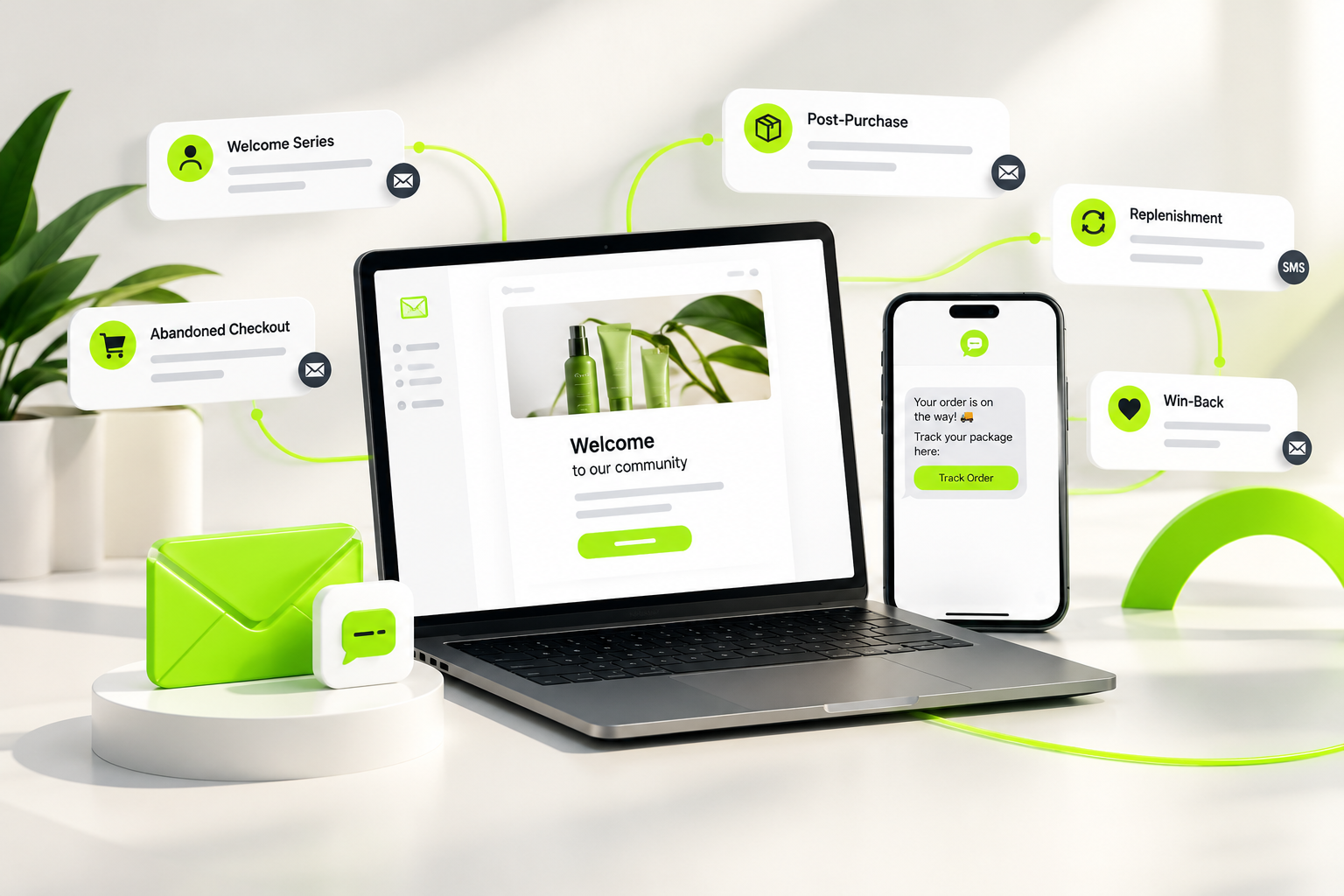
Here are five essential automations growing eCommerce brands should consider.
1. Welcome Series: Turn New Subscribers Into Customers
Your welcome series introduces new subscribers to your brand and gives them a reason to explore your products.
Use this sequence to communicate your value proposition, highlight bestsellers, answer common questions, and explain what makes your products different. If your business offers a welcome incentive, present it clearly without making discounts the only reason to buy.
Segment the series when possible so returning customers don’t receive messaging designed exclusively for first-time buyers.
2. Abandoned Checkout: Recover Missed Opportunities
Shoppers sometimes leave during checkout because they become distracted, need more information, encounter friction, or decide to postpone the purchase.
A well-timed reminder can bring them back. Show the relevant products, provide a direct route to resume checkout, and address common concerns such as delivery, product suitability, or returns when those details are available.
Avoid assuming every abandoned checkout requires a discount. Helpful information may be enough to move the customer forward.
3. Post-Purchase: Build the Next Customer Relationship
After an order, prioritize reassurance and product value before immediately pushing another sale.
Start with order-related updates, then consider product education, care instructions, complementary recommendations, and review requests at appropriate stages.
Use purchase history to determine which recommendations make sense. Someone who buys a starter kit may need a refill, while another customer may be ready to explore a complementary product.
4. Replenishment: Make Repeat Purchases Easier
For consumable products such as skincare, supplements, and food, replenishment reminders can make reordering convenient.
Estimate timing using product size, expected usage, and observed customer purchasing patterns. A reminder should arrive when the customer may genuinely need another order, rather than following an arbitrary schedule.
Let customers reorder easily, and avoid unnecessary reminders when they have already purchased again.
5. Win-Back: Re-engage Customers Who Have Gone Quiet
A win-back flow targets previous customers who haven’t purchased within their expected buying cycle.
Begin with a relevant reminder, product discovery, or a personalized selection. If appropriate, follow up with an incentive or an update about new products. Keep the sequence focused, and exclude customers who purchase again while the flow is active.
The ideal timing depends on your product category and customers’ typical buying behavior.
How to Make Your Automation Work Together
The value of automation comes from the connections between flows, not simply the number you activate.
Use clear entry conditions, sensible delays, customer exclusions, and behavioral segments to prevent overlapping messages. Coordinate email and SMS so customers aren’t repeatedly contacted about the same event.
Review attributed revenue alongside repeat purchase rate, conversion, unsubscribes, deliverability, and overall profitability. Test one meaningful variable at a time so you can identify what actually improves performance.
Build a Retention Program That Scales
Welcome, abandoned checkout, post-purchase, replenishment, and win-back flows provide a strong foundation for a more mature retention strategy.
As your brand grows, expand into VIP experiences, cross-sells, back-in-stock notifications, and other automations that match your catalog and customer behavior.
Zee Retention helps DTC brands develop data-driven email and SMS systems that turn customer interactions into more relevant experiences and sustainable repeat revenue.
Ready to improve your retention marketing? Book a discovery call with Zee Retention.