
Acquiring a new customer is only the beginning of a profitable customer relationship. For direct-to-consumer (DTC) brands, sustainable growth comes from giving customers compelling reasons to return, purchase again, and build a lasting connection with the brand.
Yet many eCommerce businesses focus heavily on acquisition while overlooking what happens after checkout. Without a thoughtful retention strategy, brands can end up spending more to acquire new buyers while missing opportunities to generate additional revenue from customers they already have.
The solution isn’t simply sending more emails or offering bigger discounts. It’s building a customer journey that makes every interaction more relevant.
What Is Customer Lifetime Value?
Customer lifetime value (LTV or CLV) represents the revenue or, when measured on a profit basis, the profit a business generates from a customer over the course of their relationship with the brand.
Several factors influence lifetime value, including purchase frequency, average order value, customer retention, and the cost of serving each customer.
For DTC brands, increasing LTV means creating more opportunities for customers to return without relying entirely on expensive acquisition campaigns.
1. Build a Post-Purchase Experience That Keeps Customers Engaged
The customer journey shouldn’t end when an order is placed. The period immediately after a purchase is an opportunity to reinforce the buying decision and build trust.
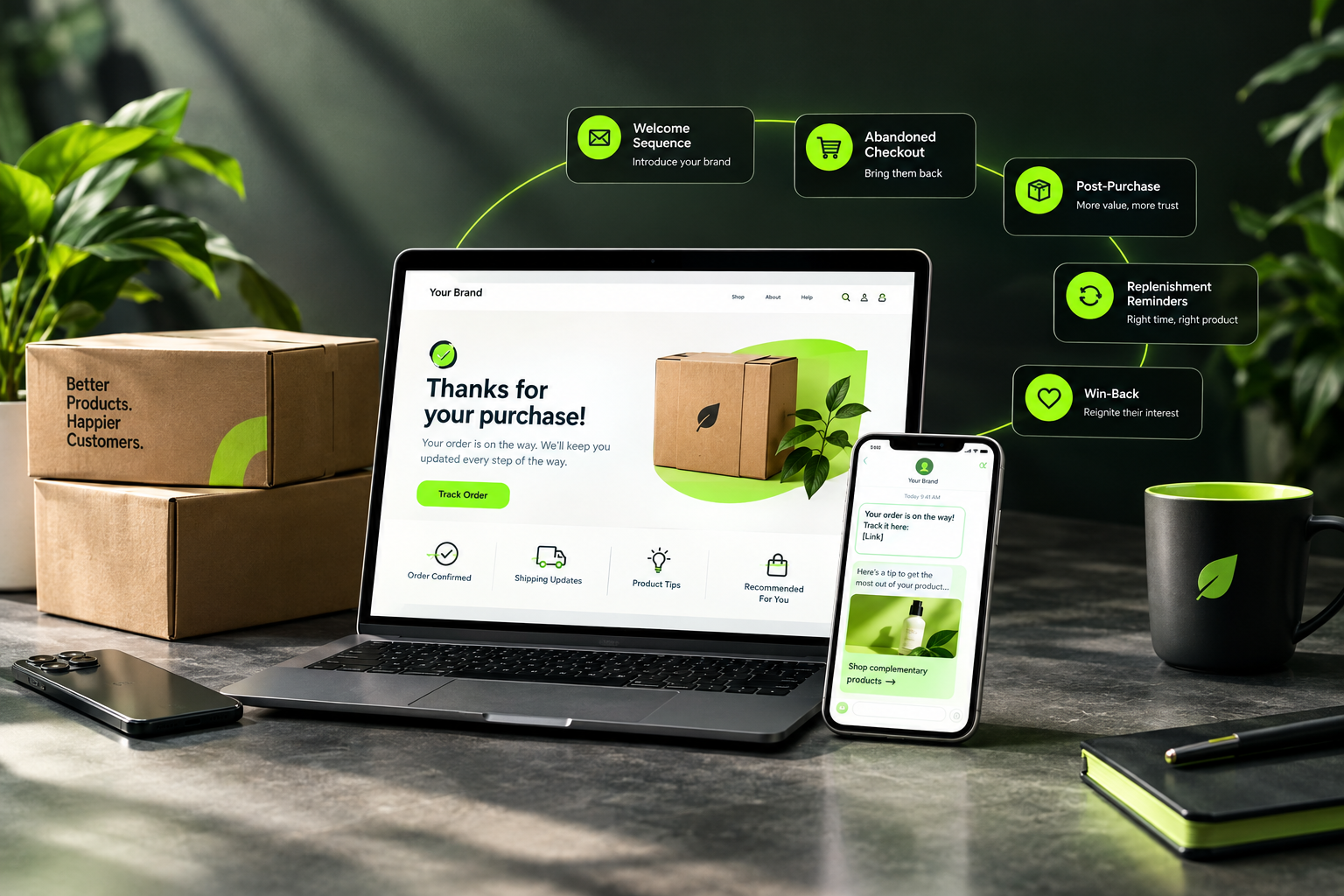
Start with order confirmations, shipping updates, and useful product information. Follow up with care instructions, setup guidance, or tips that help customers get more value from their purchase.
Once the customer has had time to experience the product, introduce relevant complementary products or invite them to explore other items that match their interests.
The goal is to make the next interaction genuinely useful, not simply another sales message.
2. Use Email and SMS Automation to Create Timely Touchpoints
Manual campaigns can keep customers informed, but automated lifecycle messaging helps brands respond to individual customer behavior at scale.
A well-structured retention program can include:
- Welcome sequences that introduce the brand and encourage a first purchase.
- Abandoned checkout reminders that help interested shoppers complete their orders.
- Post-purchase flows that educate customers and introduce relevant next steps.
- Replenishment reminders based on expected product usage.
- Win-back sequences for customers who have stopped purchasing.
Each flow should reflect the customer’s actions, preferences, and buying cycle. A replenishment reminder for skincare, for example, should follow a different timeline from a follow-up for a product that lasts several years.
3. Segment Customers Instead of Sending Everyone the Same Message
Not every customer needs the same offer or information.
A first-time buyer may need reassurance and product education. A repeat customer may appreciate a complementary recommendation. A high-value customer might respond better to early access, exclusive experiences, or a personalized product selection.
Useful segments can be built around purchase history, order frequency, product category, engagement, and customer value.
This makes communication more relevant while reducing the need to rely on broad, repetitive promotions.
4. Give Your Best Customers a Reason to Stay
Your most valuable customers deserve a retention experience that reflects their relationship with your brand.
Consider early access to launches, loyalty benefits, product bundles, personalized recommendations, and exclusive content. These experiences can encourage continued engagement without making discounts the centerpiece of every interaction.
Study what your best customers buy, how frequently they purchase, and which products they tend to explore next. Use those patterns to improve recommendations and identify opportunities to attract similar customers.
5. Measure Retention Beyond Email Revenue
Revenue attributed to email and SMS is useful, but it doesn’t tell the entire story.
Monitor repeat purchase rate, time between orders, customer lifetime value, average order value, unsubscribe rates, and the profitability of retention campaigns.
Evaluate results over appropriate time periods and compare customer groups where possible. This helps distinguish genuinely incremental growth from purchases that might have happened anyway.
Turn Retention Into a Growth System
Customer retention works best when post-purchase communication, behavioral segmentation, email, and SMS operate as one connected system.
For growing DTC brands, the opportunity is to move beyond isolated campaigns and build a program that supports the entire customer lifecycle.
Zee Retention helps eCommerce brands develop data-driven retention systems designed to convert more visitors, generate repeat purchases, and grow customer lifetime value.
Ready to make more of the customers you’re already acquiring? Book a discovery call with Zee Retention.